Friday, 21 July 2023
Not Holding Power to Account - The Consequence of the Lack of Media Diversity
Tuesday, 30 May 2023
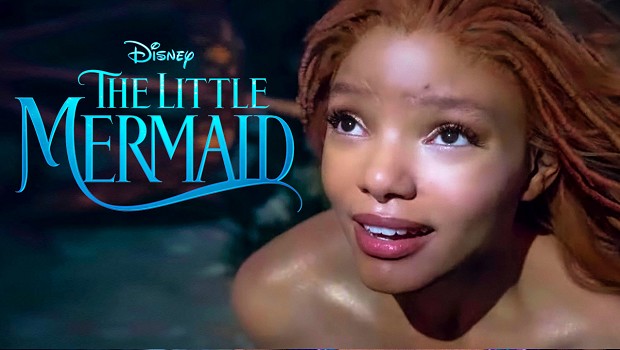
Disney’s The Little Mermaid, Caribbean Slavery, and Telling the Truth to Children
Children’s films should not ignore the more difficult parts of our history, just because adults feel uncomfortable addressing them.
The question is: How do we make films for children of all races that acknowledge the horrors of historical events such as slavery, while making sure they are free to imagine a wonderful world unencumbered by racism and are not defined by it?
On Sunday I watched the new live action version of Disney’s The Little Mermaid with my six-year-old son.
The visual effects are stunning and the casting is brilliant. If you are not aware, and at this point you would literally have to be living under a rock in the middle of the ocean not to be aware, Halle Bailey plays the eponymous heroine in a celebration of normalising Black beauty standards for children.
For my young son to see the most beautiful character in a film as a Black woman (with non-straightened hair) is important to me as a parent and goes against literally centuries of White beauty standards and societal norms. It is anti-racism at work on a deep level.
However there is one jarring massive problem with the film and it is less about its treatment of contemporary racial issues and more about its treatment of historical transatlantic slavery.
The film is set in the Caribbean in the 18th century. It does not specify exactly when, but judging from the ships, clothes and other references it is during a time of African chattel slavery. And yet there is not a single direct reference to slavery and the islanders live in racial harmony.
In this setting, I do not think we do our children any favours by pretending that slavery didn’t exist. For me Disney’s preference to try and wish the inconvenient truth away says more about the adult creatives than it does about children’s ability to work through it.
The enslavement of Africans in the Americas (across the southern states of the US, Caribbean and South America) in the 18th century was a brutal time and has been described by some historians and commentators as a “holocaust”, a crime against humanity that is so heinous that there are calls to this day for reparations to compensate the descendants of the victims.
Setting the fantastical story in this time and place is literally the equivalent of setting a love story between Jew and Gentile in 1940 Germany and ignoring the Jewish holocaust. Or possibly more accurately setting it in a slave plantation in America’s antebellum south and pretending the enslaved Africans were happy.
The 18th century Caribbean is a problematic time to set any children’s story, but that should make it full of creative possibilities as opposed to encouraging historical amnesia.
First of all, I do not need every story and movie that my 6-year-old consumes to be historically accurate. The appearance of steel pans in the film, an instrument invented in the late 1930s, raised a wry smile in the pedant in me, but I found it easy enough to overlook. But the total erasure and rewriting of one of the most painful and important parts of African diasporic history, is borderline dangerous, especially when it is consumed unquestioningly by children. I do not want my child to think that the Caribbean in the 18th century was a time of racial harmony, any more than I suspect a Jewish father wants his child to think 1940 Germany was a time of religious tolerance, however much we might both wish they were.
So does this mean Black children cannot have escapist fantasies of the past, or all our historical stories have to overtly address racism and slavery?
Definitely not.
I want my Black son to be as free, joyful and unencumbered by horrors of history just as much as any of his White and Asian friends at school, but I also do not want him, (or any children) to be given a false view of history on key issues - slavery being one of them.
There are several ways in which Disney could have easily set The Little Mermaid story in the Caribbean in the 18th century and not whitewashed (excuse the pun) the importance of history.
For example they could have set the story in Haiti post-1804. Haiti was the first Caribbean country to throw off the shackles of slavery and most importantly in its constitution of 1805 explicitly denounces the idea of different “races” proclaiming true equality. According to Julia Gaffield, a professor of history at Georgia State University, the constitution even “explicitly acknowledged that some ‘white women,’ Germans, and Poles had been naturalized as Haitian citizens highlighting the radical reconceptualization of race that underpinned Haiti’s entry on the world stage.”
In this scenario the Little Mermaid could have easily found her prince, while race and slavery could have been gently touched upon without being overbearing or having to show the horrors. A post revolutionary Haiti would have been the perfect setting for an island of racial harmony, and in doing so it would have gently educated children about an important period in world history.
When we think creatively and know our Caribbean history there are numerous solutions to setting the story in the Caribbean during the time of slavery while neither wanting to erase our history or expose children to the full horrors of chattel slavery. As someone of Jamaican heritage I would have loved the Little Mermaid to fall in love with a Maroon (a runaway slave), although that would have required her to swim a little upstream towards the island's interior.
We owe it to our children to give them the most amazing fantastical stories possible to help their imaginations grow. We do not do this by “whitewashing” out the difficult parts of our history. We do it by embracing our rich history and empowering them with the truth. Next time I hope Disney can be as adventurous with its story telling as it was with its casting.
Tuesday, 23 May 2023
ChatGPT is an existential threat to media diversity
Question to ChatGPT's Open AI - Why is media diversity important?
Answer by ChatGPT's Open AI - Media diversity is important for several reasons:
1. Representation: Media diversity ensures that different voices, perspectives, and experiences are represented. It allows for a more accurate reflection of the diverse societies in which we live. When media outlets showcase a range of races, ethnicities, genders, sexual orientations, religions, and abilities, it helps combat stereotypes, promotes inclusivity, and empowers marginalized communities.
2. Pluralism: Media diversity fosters a pluralistic society by exposing individuals to a wide range of ideas, opinions, and viewpoints. It encourages critical thinking, open dialogue, and the exploration of different perspectives. A diverse media landscape helps to prevent the dominance of a single narrative or ideology, allowing for a more informed and balanced public discourse.
3. Democracy and civic participation: A diverse media ecosystem is crucial for a healthy democracy. It ensures that citizens have access to a variety of information sources, enabling them to make informed decisions and participate meaningfully in civic life. When media outlets represent a broad range of interests, they can hold governments, institutions, and powerful individuals accountable, fostering transparency and good governance.
4. Social cohesion: Media diversity contributes to social cohesion by promoting understanding, empathy, and unity among diverse groups. By portraying a range of experiences and identities, the media can bridge divides and create a sense of shared humanity. It helps challenge prejudices, reduce discrimination, and build a more inclusive society where everyone feels valued and respected.
5. Economic and cultural benefits: A diverse media industry can have economic and cultural benefits. It creates opportunities for diverse content creators, journalists, and artists, allowing them to share their talents and stories with a broader audience. This, in turn, promotes innovation, creativity, and cultural exchange, enriching society as a whole.
In summary, media diversity is essential for representation, pluralism, democracy, social cohesion, and economic/cultural benefits. It ensures that the media landscape reflects the realities of diverse societies, amplifies different voices and perspectives, and facilitates a more inclusive and informed public discourse.
Far too often the debate around media diversity is framed in terms of point five, the need to employ more Black and Asian people in the industry at different levels, or employing more women, disabled people, LGBTQ+ (insert the protected characteristic / underrepresented demographic here).
While increasing the employment prospects and career progression of all these different groups is important it fundamentally misses the other four points and puts media diversity on par with increasing diversity in any other industry or sector; from double glazing to medicinal chemist (just for the record some of my best friends work in double glazing and I once dated a medicinal chemist).
What ChatGPT so beautifully explains is the idea that media diversity is about so much more than employing a few more Black and Asian people in the media industry at different levels, or employing more women, disabled people, LGBTQ+ (insert the protected characteristic / underrepresented demographic here).
While increasing the employment prospects and career progression of all these different groups is important it fundamentally misses the point and puts media diversity on par with increasing diversity in any other industry or sector; from double glazing to marine biologists.
The importance of media diversity is unique and it goes to the very heart of how we function as a society.
And this is precisely why ChatGPT is an existential threat to media diversity.
If we believe media diversity is about freedom of speech, democratic discourse, and who is empowered to contribute to the narrative that society tells about itself and the rest of the world.
Fundamentally if we believe in representational democracy, we must fight for representational story telling. Because it is the stories we tell, both fiction and non-fiction, that shapes our understanding of the world, our values, our beliefs, and how our democracy works.
ChatGPT and other forms of AI are an existential threat to that.
ChatGPT creates text and stories (fiction and non-fiction) which are then used by students, authors, scriptwriters and journalists as a first draft which they can edit, or to supplement their own existing work. (In the future it may not even support the work of creatives but replace them)
The problem is ChatGPT is “White, non-disabled, heterosexual and male”. In that the source text that ChatGPT’s algorithms draw on are disproportionately written by white, non-disabled, heterosexual men.
This should hardly be surprising for anyone who works in the field of media diversity. It is already known that white, non-disabled, heterosexual men are disproportionately over-represented in areas such as journalism, literature, film and theatre.
By drawing on the current source materials ChatGPT will by definition amplify the already existing inequalities of the narratives, values and views of white, non-disabled, heterosexual men being over-represented.
Let me illustrate this with one simple example:
In 2020 the Press Gazette published research by Women in Journalism, showing that in one week in July 2020 - at the height of the Black Lives Matter protests across the world - UK’s 11 biggest newspapers failed to feature a single byline by black journalist on their front pages. Taking non-white journalists as whole of the 174 bylines examined only 4 were credited to journalists of colour.
The same report also found that in the same week just one in four front-page bylines across the 11 papers went to women.
Importantly the week the study surveyed the biggest news stories were about Covid-19, Black Lives Matter, the replacement of the toppled statue of the slave trader Edward Colston in Bristol and the appeal over the British citizenship of the Muslim mother, Shamima Begum.
Assuming ChatGPT's algorithm draws on the stories written by journalists in mainstream newspapers to generate its text, if you ask it any questions about the news that week you will literally be hearing from the voices of White men; White men writing about issues that disproportionately impact people of colour.
If you do not see this as a problem then I strongly suspect you are reading the wrong blog.
The question, for those of us interested in media diversity, is what do we do now?
I do not believe the answer is to simply disengage from ChatGPT and hope it goes away. Instead we have to find ways to engage constructively and find ways for journalists, and other creatives, to use ChatGPT in ways which do not effectively silence, or further marginalises, already under-represented groups.
This is incredibly new territory and I don't think anyone has all the answers of how to do this, but that doesn't mean we shouldn't try.
I am calling on journalists and creatives to join me in creating a manifesto, a simple set of guidelines, of how we should work with ChatGPT constructively and what we should be demanding of the tech companies who create these programmes.
This issue is too important to leave it up to or other people to work out the solutions. (My DM's are open @marcusryder)
Wednesday, 3 May 2023
World Press Freedom Day is Meaningless Without Media Diversity
My concern, as a Black British journalist, is that the UK’s position might be even worse for people of colour working (or more specifically failing to work) in the industry.
Freedom of the press means nothing if large sections of the population are denied access to it.
According to the Reuters Institute, only about 0.2% of British journalists are Black
In 2020 the Press Gazette published research by Women in Journalism, showing that in one week in July 2020 - at the height of the Black Lives Matter protests across the world - UK’s 11 biggest newspapers failed to feature a single byline by a black journalist on their front pages. And of the 174 front page bylines examined in that period only 4 were credited to journalists of colour.
The same report also found that in the same week just one in four front-page bylines across the 11 papers went to women.
It should be noted that the week the study surveyed featured front page stories about Black Lives Matter, the replacement of the toppled statue of the slave trader Edward Colston in Bristol and the appeal over the British citizenship of the Muslim mother, Shamima Begum.
Front page stories frame how the public view an issue with many never getting past the headline.
A recent report by the Ethical Journalism Network also found that anti-black racism in UK newsrooms is “commonplace”.
And finally there is not one single major television news bulletin from the BBC’s Breakfast News, One O’clock, Six O’clock or Ten O’clock to Channel 4’s Seven O’Clock to any of ITV’s major bulletins or Channel 5s which is headed by a person of colour or a visibly disabled person.
For clarity I am not talking about the people in front of the camera – I am talking about the executives and editors behind the camera, the people with real power who decide which stories are covered and how.
Today, in newsrooms across Britain – whether print, online or on TV - it is primarily white, non-disabled, heterosexual men, in London who are deciding what issues news organisations should cover and how they should be covered.
This is a damning indictment of the very principle of Press Freedom, if Black people are not able to tell their stories or are relegated to minor coverage - even about stories that directly affect us such as the #BLM protests - we do not have a free press.
This is not a freedom that is being curtailed by “evil” governments targeting the press, which is how many of the stories about World Press Freedom Day are framed. This is a press freedom that is being curtailed by the inner workings of the newsrooms themselves.
When we write and discuss World Press Freedom Day we must recognise that diversity and inclusion are not viewed as a side issue, but are essential to the very press freedoms all journalists should hold dear..
It is important that we should all fight for press freedoms across the world, but in doing so we must not forget those closest to home who are also seeing their freedoms curtailed.
Sunday, 23 April 2023
Diane Abbott, antisemitism and an important lesson for journalists
Monday, 27 March 2023
DIVERSITY FAILINGS AT THE HEART OF BBC’S IMPARTIALITY WOES
Diversity needs to be at the centre of any review into BBC’s impartiality and guidelines on the use of social media.
On Monday 11th March the BBC’s Director General, Tim Davie, announced that an independent review will be carried out on examining the corporation's social media guidelines.
On Sunday 26th March the Labour Party announced its own BBC review panel. The brief of Labour’s panel covers several areas ahead of the BBC’s next charter renewal in 2027, but again one of the key issues is impartiality.
Even before they start it is easy to pick holes and be cynical about both proposed reviews:
How independent can a review into the BBC really be when the BBC itself sets up the terms of reference and will decide who sits on it?
Can a Labour review with three of the announced four members heavily associated with the Party (James Purnell, Lou Cordwell and June Sarpong) really be expected to be free of bias when reviewing issues such as impartiality and political interference?
The announcement of both reviews come in the wake of the Gary Linekar Twitter controversy, where the BBC initially suspended him for Tweeting about the government’s rhetoric around immigration only to reinstate him less than a week later. Irrespective of any criticisms of how either review has been set up or will operate, what they clearly point to is the growing need for a review into the BBC’s editorial guidelines, with specific reference to how it interprets and implements the principle of “due impartiality”.
However, what most people seem to be missing in all the discussions around BBC impartiality is the centrality of diversity.
Over the last three and a half years the BBC has made four major public editorial U-turns around the issue of impartiality. All four of them have been about diversity and/or minoritised groups:
In October 2019 the BBC reversed its ruling that Breakfast News presenter, Naga Munchetty, had broken editorial guidelines when discussing whether one of President Trump’s Tweets was racist.
In August 2020 the BBC finally apologised for one of its news reporters using the N-word after initially defending the decision.
In October 2020, in what the BBC described as a “clarification” as opposed to a “U-turn”, the corporation said that staff would be allowed to attend Pride marches and this would not compromise their impartiality after initially saying they would not.
And finally in March 2023, the BBC made - what was seen by most - as a U-turn when it initially suspended Gary Linekar over his Tweets about the government’s rhetoric around immigration, only to reinstate him less than a week later. (The BBC was at pains to describe this not as a “climb-down” but “proportionate action).
All four editorial issues have the issue of diversity and inclusion at their core. The first two being obviously racial issues, the third being about LGBTQ+ rights and the fourth, immigration, being a heavily racialised subject.
The biggest problem that the BBC has, when it comes to its editorial guidelines in general, and “due impartiality” in particular, is diversity.
It is the editorial issue literally hiding in plain sight.
This is about how a centralised organisation, which is meant to represent the whole of the UK, fairly represents the concerns and interests of, and about, minority groups while maintaining due impartiality. I saw this problem close up with regards to regional diversity when I was head of BBC Scotland Current Affairs in 2014 covering the Scottish Independence referendum. The fall out of which the BBC is still suffering from.
We do need to set up an independent review into BBC’s editorial guidelines and impartiality, but unless diversity is at the very centre of the review it will fail irrespective of who sits on it.
Thursday, 2 March 2023
Award ceremonies reveal the uncomfortable truth of British journalism
Last night I attended the Royal Television Society (RTS) Television Journalism Awards. Having sat on one of the judging panels, I was keen not only to find out about the results of our lengthy deliberations (the final votes are by secret ballot) but having been unable to attend the prestigious ceremony for several years due to COVID-19 I was also interested to see “IRL” how the industry I have spent almost thirty years in is faring, especially in terms of reflecting diversity.
Those of you who know me will know that I believe diversity is essential to strong journalism – and has been especially essential this past year with British coverage of key events under significant domestic and global scrutiny – from the Ukraine war to the death of Queen Elizabeth. Indeed, over the last year we have seen examples of UK and international journalism making serious mistakes, precisely because of a lack of diversity.
Spoiler alert: I can’t say that I came away from the RTS ceremony last night feeling better about the current state of the industry.
In many ways, I should have known. There are vastly different perceptions of progress on diversity in the industry, and those who are in the public eye seem to be focused on creating a narrative of progress.
A few hours before the award ceremony I had been in a briefing call with another television and news veteran. They will be hosting an event I have agreed to participate in, focused on diversity in broadcast journalism. During the briefing, the host asked me to focus on the “positives” that we should be talking about as “we don’t want to be too critical”.
At the RTS ceremony itself, I was honoured to be sat on the same table as one the most powerful people in British television. The senior executive was eager to convey how well their particular organisation is doing when it came to racial and gender diversity, both in the level of their employees overall, and at senior management. The executive did admit with some regret that levels of disability are very low, but this was caveated with the idea that the actual level might be higher and there is a problem of “people not wanting to declare that they are disabled”.
I recognised this narrative. In 2012, I convened my first RTS Diversity Committee meeting, and was assuaged by an executive about their particular broadcaster: “You know, if you look at our staff diversity numbers, they are really rather good, but our disability numbers are not good.” Sadly, this was not true, and over time it was revealed that the organisation was simply using metrics that gave them the results they wanted to believe to be true.
I wondered if the ceremony, then, would reveal the change since 2012.
There are some pieces which suggest a potential shift. The BBC recently promoted Ravin Sampat to the position of executive news editor with a brief to oversee UK story teams, and Lebanese-born Lilian Landor was appointed Director of the BBC World Service in 2021. While at ITN, there have been similar key appointments at ITV News, and the Sir Lenny Henry Centre for Media Diversity, (who I work for) were heavily involved in working with Channel 4 on its “Black to Front” project which not only highlighted the non-White talent at Channel 4 News but also helped progress certain careers afterwards
However, in the infamous words of Lenny Henry commenting on the Bafta Television awards in 2013, it soon became apparent that the RTS Television Journalism Awards 2023 would be; “all White on the night”.
Many of the awards, such as Network Daily News Programme of the Year, went to entire production teams, meaning there were often several people on stage at a time. A lot the teams had a smattering of people of colour. And of course, it is impossible to always know someone’s race and ethnicity just by looking at them, and so sitting in the audience one cannot say for certain what the race and ethnicity of all the winners was.
But with the notable exception of Clive Myrie, who won Network Presenter of the Year, almost every person who accepted an award and gave the acceptance speech – even on behalf of the teams – appeared to be White. There was just one person who had a visible disability, Jeremy Paxman, winner of Lifetime Outstanding Contribution Award, who needed to be assisted onto the stage.
Three quarters of the way through the ceremony another person sitting on my table, a former senior television executive, leaned over and whispered in my ear; “Marcus, they are ALL White”. Later, a respected media commentator who had been present messaged me: “Good to see you tonight. I was utterly shocked how White that event was. Quite incredible”.
Clive Myrie’s win was notable and it is important to recognise his contribution to television journalism in the last year. He has been a mainstay on British and international screens with the reporting of the Ukraine war. However, he comes in a long line of single news presenters of colour being the exception in an otherwise predominately White industry. The likes of Trevor McDonald, Rageh Omaar and Krishnan Guru-Murthy - all great journalists, reporters and presenters who rightly deserve the numerous awards they have received over the years - are Myrie’s predecessors in more than one way. This means that while Myrie’s achievements should be seen as impressive on an individual basis, they cannot be seen as an indication of progress in terms of increasing racial diversity in newsrooms.
What the RTS television journalism award ceremony seemed to reveal, in fact, is one overarching, and slightly uncomfortable, truth.
That while there has been some progress in terms of newsroom diversity, the journalism that is most respected and valued by the industry; the journalists that cover the biggest news stories; the journalism that commands the largest budgets; and the journalism that shapes national British debates and frames the way Brits view the world remains overwhelmingly the preserve of White people. In this respect, there has been almost no progress in over twenty years.
But here is what really kept me from sleeping as I returned to my warm bed last night.
Awards ceremonies always have winners and losers. Emotions are always high, even when it comes to journalism awards, despite our well-known stoicism. But it was the huge gap between the desire to be optimistic and self-congratulatory of many when it comes to diversity, versus the private realism and shock of others in the room – whether White, Black, disabled or able-bodied – that was incredibly stark.
Perhaps most remarkably, it was the fact that those who have the opportunity and potential to change this, far too many of them appear to be in denial, truthfully or otherwise, of how poor the industry’s diversity problem is, and how little substantive progress has been made in the last few decades.
The ultimate question has to be, “Can there ever be real change?”